

06. THE PRACTICE OF MURAQABAH

Muraqabah is the healing we seek and the freedom we lack. It replaces unstable states with rooted realization of our origin, awakens the inner senses, and carries the seeker from restlessness to peace and from peace to Ultimate Reality.
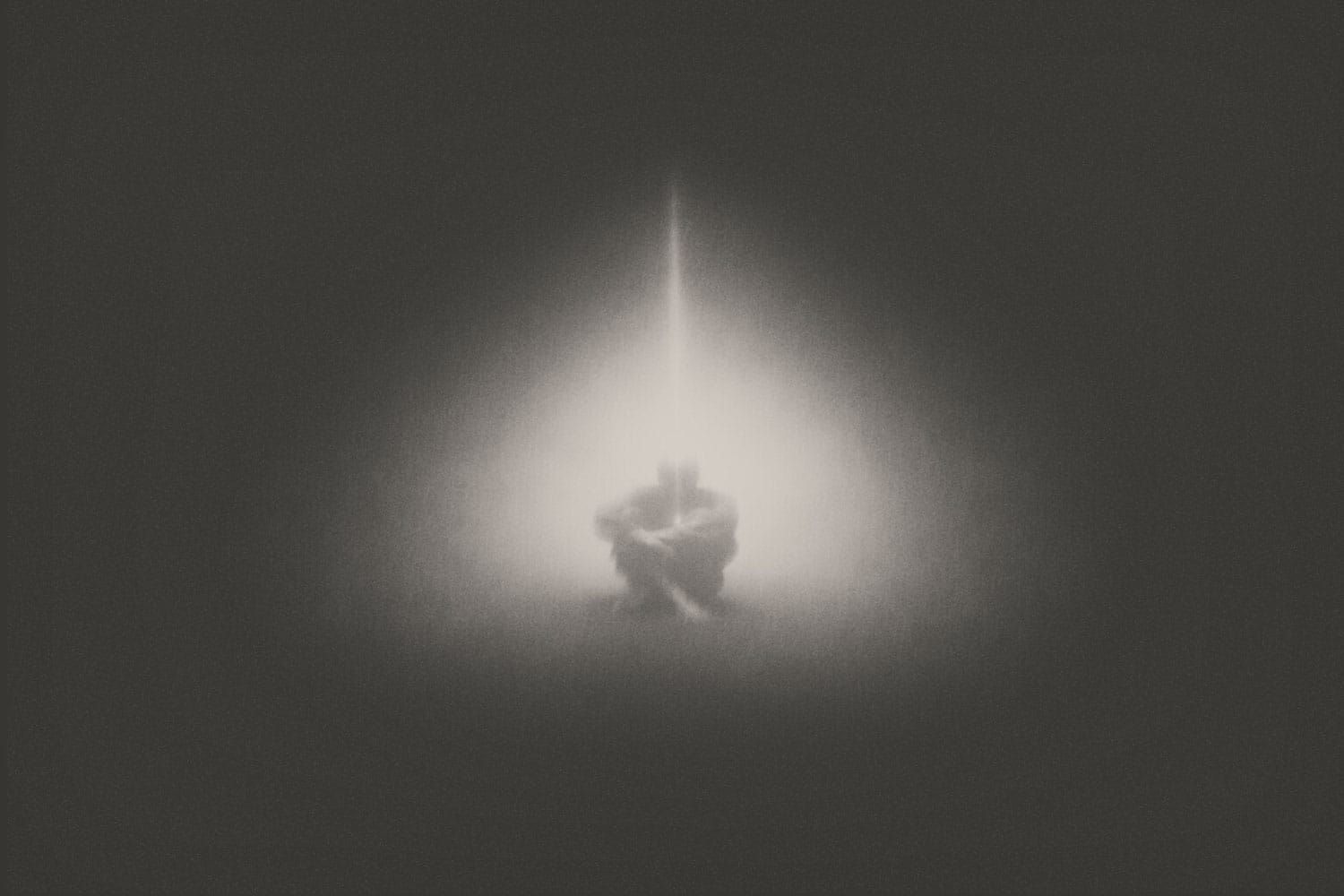
There are two faculties of sense operative within us. One is Shuoor, the conscious aspect that relies on sensory perception and focuses on the external world. The other is La Shuoor, which pertains to the inner senses and the subconscious, and is oriented toward the inner dimensions of creation.
What we focus on during our conscious state is reflected in our subconscious. For example, if we entertain many worrying thoughts, they tend to appear in our dreams. On the other hand, if we are at peace, that tranquility is reflected there as well.
The problem lies in preventing our higher states of existence from influencing our conscious state. By focusing solely on the lowest dimension, we create barriers that block inspiration. We tend to view life from a bottom-up perspective, assuming that the lowest state contains everything and is the point from which we are elevated. This perspective is limited and prevents us from reaching Reality.
What is needed is a reversal of perspective. Rather than allowing our conscious state to dictate our well-being, we must create space for the subconscious to shape and influence our conscious experience. By adopting a top-down approach, we begin to understand how Reality manifests from Allah ﷻ’s Mind, through the zones and layers, and into manifested form. This shift in perspective deepens our comprehension of Reality and allows our higher selves to influence our well-being, rather than remaining confined and limited to the lowest and narrowest point of perception.
Dreams hold significant importance in spirituality. Many religions emphasize their value, and in the Holy Quran, dreams are seen as a form of Divine Communication. We cannot deny their significance, as illustrated by the story of Nabi Yusuf (AS), where dreams convey important messages.
It is essential to understand that our inner senses—our subconscious—are directly linked to the state of dreaming. When we sleep, we enter the dream state unconsciously, while our bodies remain at rest. An inner entity within us travels beyond the constraints of time and space.
During Muraqabah, we attempt to enter a similar state consciously. We strive to experience the dream world while remaining fully aware. Muraqabah allows us to disengage from the chatter of the mind and enter the dream realm in a state of wakefulness and awareness.
This creates space for tafakkur (contemplation), enabling us to perceive heightened states of Reality and deeper truths by engaging with the spiritual realms as we gradually become conscious of the subconscious. In the dream state, we are free from the constraints of time and space, whereas in the physical realm, we are completely bound by them.
As we shift our attention inward, we disengage from the external senses, effectively switching off our sensory perceptions. This activates and awakens La Shuoor. As we gradually become conscious of the subconscious senses, we begin to recognize the capability within us to transcend time and space, freeing us from their limitations. It is akin to falling asleep, but consciously. As Hudhoor Qalander Baba Auliya (RA) has said, “Muraqabah is the practice of dreaming while awake.”
When we have a problem with our bones, we consult an orthopedic specialist, as they are experts in that area. If we need heart surgery, we seek an expert heart surgeon. Similarly, when we want to study a subject, we look for an expert in the field who has the experience to teach us.
Likewise, when someone seeks the path of Reality through spirituality, they should seek a Mentor who has already walked the Path, reached the Destination, and knows the ins and outs of the spiritual path and the nuances of the journey. The Mentor can guide with wisdom, direct the seeker, and oversee their spiritual transformation, which can sometimes be overwhelming.
It is through Muraqabah that we come to recognize and experience two faculties operative within the human being. One is confined and limited to the physical aspect, while the other is liberated, transcending the limitations of the body. This liberated entity within us draws us closer to the senses of the Soul, enabling us to experience and interact with the spiritual dimensions of existence, bringing us into the Divine.
To help visualize this, consider how daylight in Earth’s atmosphere appears light blue. If you travel beyond this atmosphere into space during the day, you will find yourself floating in an endless black expanse. In the same way, the vision of Shuoor is limited. When you move beyond this atmosphere, you begin to traverse the boundless consciousness of La Shuoor.
The concentration achieved through Muraqabah takes us beyond the constraints and restrictions of the waking world into the liberated and free senses of the dream world while maintaining full awareness. This process brings forth Divine Knowledge and Attributes, enlightenment, deeper realms of existence, and self-exploration. Eventually, Muraqabah becomes a state of being. Whether your eyes are closed or open, you have the ability to see beyond the physical.
Within every human being exist extraordinary capabilities. Yet the knowledge of the Soul remains dormant because the power of mental concentration is rarely used.
Muraqabah is the art and science of concentration. It is the practice of focusing the mind on a single thought until all other thoughts disappear. As Khawaja Shamsuddin Azeemi (RA) explains in his book Muraqabah, when the mind is scattered across countless thoughts, its deeper abilities remain dormant. But when attention is gathered and directed toward a single point, the hidden capacities within us begin to surface.
In our daily lives, the mind is constantly shifting under the influence of emotions, thoughts, and impulses. Because of this continuous influx of thoughts, we rarely perceive the deeper aspects of our own being or the source of our origin.
Concentration is the act of focusing the mind on a single point or thought. Through Muraqabah, we are able to achieve this state and become thoughtless within a single thought. Achieving this state is the point through which the spiritual senses become activated.
The concept of meditation dates back centuries and serves various purposes, including mindfulness, tranquility, healing, and more. In today’s fast-paced world, as people constantly seek well-being to alleviate their miseries, spirituality and meditation have increasingly become commercialized.
Muraqabah, however, is a practice that lifts us out of our miseries while revealing the truth—without cost. It connects us with our innermost Self, which naturally heals all other aspects of our being. It is a practice of concentration, the first class given to any spiritual student. Its aim is to disengage us from the external senses and awaken our inner senses.
Some are content with attaining peace of mind and relief from restlessness and inner turbulence. Others feel a deeper pull, a curiosity that urges them to dive into ultimate Reality. Muraqabah accommodates both. It grants stability to those who seek peace and depth to those who seek Truth.
The practice begins with finding a comfortable place with a suitable temperature and a relaxed body, preferably a dark, quiet space that supports stillness. The external senses must gradually quieten, allowing attention to shift from the body to the mind and eventually beyond it.
Breathing exercises and Dhikr propel and guide us toward a single point of focus. The mind is directed toward one thought, which can be challenging at first, as neither the body nor the mind is accustomed to such discipline. Yet with determination and consistent practice, it becomes attainable for anyone.
The difficulty lies in our impatience; many expect immediate results and abandon the practice before its effects are felt.
Often, people complain, “My body cannot stay still,” or “My mind wanders, and I cannot focus.” Others conclude, “Meditation just isn’t for me.” The first step is simply to sit. Choose a time that suits you and commit to sitting at that same time every day. With repetition, the body adjusts and learns how to relax. Determination and consistency are essential; it will not happen after only a handful of attempts.
Initially, your mind will wander, and that is completely normal. What matters is gently guiding it back to a single point of focus.
For example, if your visualization during Muraqabah is blue rays descending from the sky, visualize absorbing them through the crown of your head and into your heart. This visualization becomes your focal point during the practice.
Whenever your thoughts drift and you become aware of it, gently return to your point of focus. There is no need for agitation; simply acknowledge the distraction and redirect your attention.
Think of it like driving from your home to the office. Along the way, you will see signs, shops, schools, parks, and malls. Yet because they are not your destination, you pass them without stopping, remaining focused on reaching the office.
In the same way, through practice, we observe the state of the body and mind. We notice what distracts them and how they shift, gradually training them to align with the influence of the Soul.
As today’s world continues to modernize, countless quick fixes promise to temporarily elevate how we feel. Through substances such as alcohol, drugs, and prescription pills, some seek to numb their emotions, others chase a trance-like state, an altered perception, or a fleeting high.
Yet these methods often work against humanity rather than elevating our experience. They rob us of true awareness, offering only temporary relief, masking pain without addressing its root or understanding the mechanism behind it.
While such practices or substances may provide brief moments of calmness, realization, or heightened awareness, these sensations typically fade within hours or days, leaving one in the same restless state. You might feel elevated for a short time, but as the feeling wears off, the desire for another quick fix returns.
In fact, such practices or substances exist on the opposite end of the spiritual spectrum. They can be harmful and painful, serving as a means of escape rather than an invitation to confront the states we find ourselves in.
They fall under the category of istidraj—a state of spiritual decline—lacking lasting truthfulness or tranquility. Though they represent a form of knowledge, for everything in this universe is established upon knowledge, they can mislead us into perceiving them as beneficial rather than guiding us toward what is truly transformative. Without a true Guide who oversees and directs the seeker, one may enter territories for which they are unprepared. Such exploration, without proper grounding and guidance, can lead to confusion, imbalance, or psychological distress, in some cases resulting in addiction or substance misuse.
Many seek immediate relief, but true transformation requires process. Growth demands a willingness to be uncomfortable, to unlearn what we have adopted over the years and to confront what we would rather escape. We must come face to face with our own shortcomings and break the patterns we have adopted and grown accustomed to. This process requires courage and can be painful. Yet it is a necessary step, as one begins to see within and enters the process of tazkiyah. It must happen if one seeks to know their True Self.
It is like polishing a mirror. When it is stained, dusty, or clouded, it cannot reflect the image clearly. Likewise, for Reality to reflect within us, we must purify and polish the mirror of the mind.
When substances are used to reach heightened states of consciousness, the experience is momentary and leaves no lasting result. They are temporary and must be repeatedly consumed to be felt. If something depends on repeated consumption, it is not a state that has been established within.
Ultimately, they foster dependency. Whether in substances or in the commercialization of spirituality, they arise from the same distortion—the underlying motivations often stem from material gain, dominance, greed or fame.
In contrast, a true state of peace and sukoon is independent of any external resources. It is sustained by a pure and sincere desire to attain the Knowledge of Al-Haqq.
Muraqabah cures and nurtures us from the inside out. It teaches us to become independent of all external means, gently guiding us toward higher states of being. This gives rise to a peace that cannot be taken from us or tied to dependency.
The knowledge gained through Muraqabah becomes raasikh. As we continue to practice, our consciousness expands, allowing us to rise into deeper states of Reality once our present state has stabilized. There is no need for impatience or haste; slow and steady paves the way.
This practice activates our inner senses; it is through focus and concentration that they awaken. It is a beautiful journey toward Reality, one that is ever enlightening and sustaining.
As Murshid Kareem (RA) has said, for a flute to produce a beautiful melody, the piece of bamboo must first endure the pain of cutting, burning, and carving.
When we gain true focus oriented toward Allah ﷻ, nothing can be taken from us—no peace of mind, no experience, no bliss. So long as our intentions remain sincere, the path unfolds, and the capacity to withstand and comprehend is granted. We become established in these higher states, driven solely by the persistent desire to know our Creator.
Your link has expired. Please request a new one.
Your link has expired. Please request a new one.
Your link has expired. Please request a new one.
Great! You've successfully signed up.
Great! You've successfully signed up.
Welcome back! You've successfully signed in.
Success! You now have access to additional content.