

08. IS VISION WHAT WE THINK IT IS?

We confine vision to the physical eyes, yet its reality is not bound to them. This chapter explores what it means to truly see, guiding us toward a deeper perception of reality.
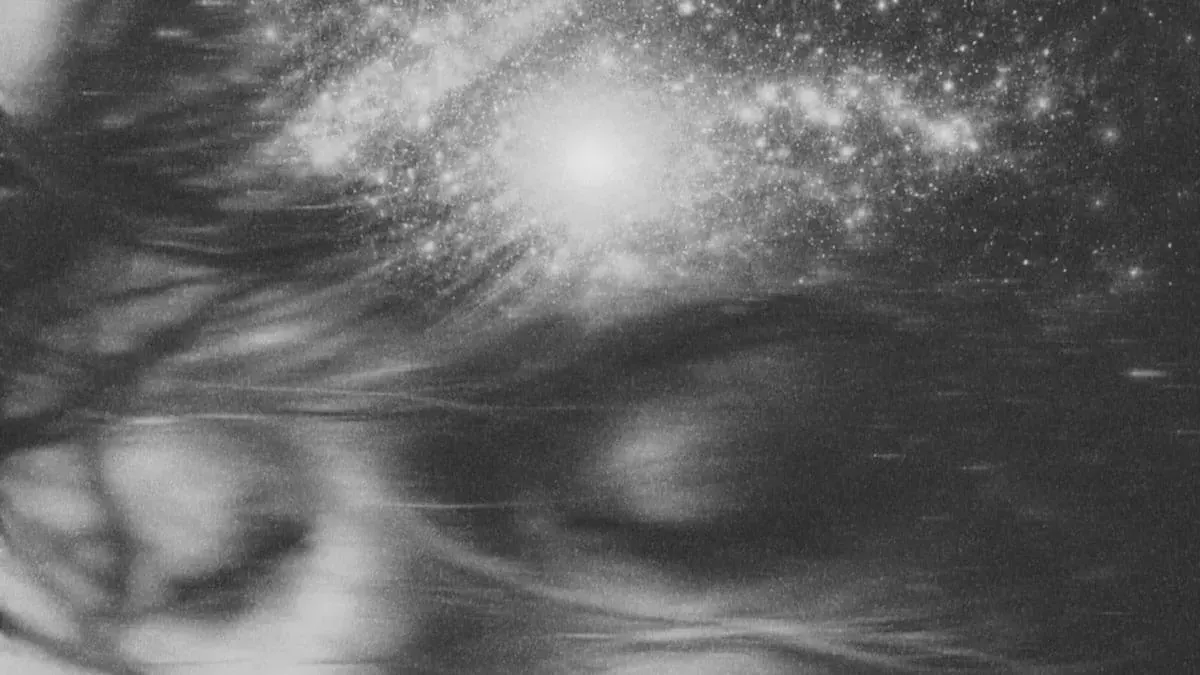
You see yourself flying over a valley of green fields.
The cool wind rushes through you, and a feeling of freedom takes over—a sense of lightness, of complete ease and happiness.
In the distance, something catches your attention.
A burst of colour.
You begin to fly towards it and descend into a field of beautiful pink roses, their fragrance unlike anything you have ever known, a sweetness that gently draws you inward. You stand there in awe, taking it all in, your arms stretched out to the sides, feeling the soft breeze as the warmth of the sun rests gently upon your skin.
A moment so tranquil, so serene, so complete that everything else disappears.
Then—
You open your eyes.
You realize… you were dreaming.
The question is:
If your eyes were closed, how did you see all of that?
Not only did you see—you experienced.
You felt the wind, the warmth of the sun, the fragrance of the roses. You moved, you witnessed, you felt the sensations, you existed within a complete scene.
This realization begins to shift our understanding of what it means to see.
We are accustomed to believing that sight belongs to the physical eyes, that only what appears before them can be seen. If something is not in front of us physically, then it cannot be perceived.
And yet, in the dream state, without the use of the physical eyes, entire worlds unfold before us.
This shows us that sight is not dependent on the eyes themselves.
Even in wakefulness, when our eyes are open, the physical eye is only a medium.
Light reflects from an object; when the eye meets that target and blinks, it captures the image, which is then formed on the screen of the mind.
In this way, the eye functions much like a camera. A camera has a lens and an eye, yet the image is not captured until the light reflects from the target, the shutter opens and closes, and the image is then recorded, appearing on film or, in our time, on a screen.
What is actually received is a reflection of that target, and that reflection is projected onto the inner screen of the mind, where it becomes visible.
The eye does not independently see; it receives and transfers.
True sighting occurs where that reflection appears within the screen of the mind, in our awareness.
When attention is directed toward a specific thing, it is then that sighting begins to take place.
Even in wakefulness, we pass through countless moments that remain unregistered. They slip by so fleetingly that we retain nothing of them, simply because our attention was not present.
For example, you are sitting in a classroom. In front of you, the teacher is explaining the topic, drawing diagrams on the board, outlining the homework, while the classmates move about. Yet your attention is not engaged in what is going on.
When you leave the classroom and a friend who was absent asks you what was covered, what the homework was, or what took place during the lesson, your response is that you do not know, because you were not paying attention.
And yet, you were present.
Your eyes were open.
Everything unfolded in front of you.
But the impressions did not register within your mind, because you did not accept them. And so, that moment passes just like a dream you cannot remember.
On the other hand, if your attention had been fully present, you would not only recall the lesson, but even the finer details—the colour of the teacher’s shirt, the chalk used on the board, the movement within the room—all of it would remain imprinted within your awareness.
Without conscious attention, experience does not leave a lasting imprint. It simply passes through unawareness.
At times, a dream can leave a deeper impression than a supposedly waking moment, simply because it was felt, received, and registered with attention.
What we must realize is this:
Where attention goes, sighting takes place.
If we are not attentive to something, we are unable to perceive it.
When we go to sleep, as the body begins to relax, the eyeballs grow heavy. As their movement comes to a halt, a state of drowsiness takes over. At this point, when the movement of the eyes stops, the subconscious senses—the nocturnal senses—begin to take over the conscious senses, and one enters the dream world.
The act of sleeping becomes a means through which we can study the capabilities of the Soul, allowing the nature and capacity of the Rooh to be known.
We cannot deny that the Soul can move without the body, as this is something we experience every night.
A significant portion of our lives is spent in the state of sleep, yet we rarely seek to understand its mechanism.
We spend our lives in two states. One with our eyes open, which refers to the outer sensory mode, where the garment of the Soul, the physical body, is in motion.
The other is the state of sleep. In this state, we are still in motion, moving, feeling, and seeing, yet the Soul’s garment is no longer in movement.
From this, we begin to understand that the Rooh is not bound by the physical body, and that true sighting does not depend on the physical eyes.
We see because there is a light within us that powers the physical eyes. When this light is stripped away from the body, the eyes are no longer able to see. Despite the presence of the organs of the eyes and the brain, we are unable to see anything.
Since the physical eyes are not used in the dream world, they are not the source of true vision. It is through this inner light that vision takes place.
Sleep is a state we usually enter into unconsciously. Yet, as it occupies nearly half of our life, it carries great significance and calls for a deeper understanding of our nocturnal senses.
Once the spiritual seeker begins to tread the path, they come to realize the significance of the dream state through the practice of Muraqabah.
With the guidance of the Spiritual Mentor, as the student comes to consciously enter the subconscious, or in other words, enters the dream world while awake and remaining aware, they come to realize that this practice itself is a gateway into Ghayb.
As one sits for Muraqabah, when the movement of the eyes ceases, external sighting fades, and internal perception becomes active. In this state, one is no longer distracted by physical forms. The nocturnal senses are awakened within the student, making it easier for them to relax the nerves and intentionally, and willingly, enter the subconscious—the state of La Shuoor—while remaining fully awake and aware.
In this process, the student comes to recognize the different layers of perception and begins to familiarize themselves with true vision, a vision that is not limited to the physical eyes or the surrounding environment.
They come to understand that the inner mechanism of sight is one and the same, whether the physical eyes are open or closed. They also realize that the state of wakefulness has nothing to do with the opening and closing of the physical eyes; it has everything to do with where our attention is awake and aware.
As mentioned in previous chapters, knowledge limited to the body or mind is not able to access the wisdom of the Soul. Each aspect holds a capacity for knowledge that serves its own level of existence, while the Soul encompasses the deeper reality behind them all.
The more we are able to access the perception of the Soul, the clearer our vision becomes, bringing us closer to truth and away from illusion.
Knowledge itself guides vision. To know that something exists, to feel its presence, to recognize something deeper than what is apparent, is itself proof of its existence and that it can be seen.
Many times, people say, “we feel something, but we do not see.” If we were to tune into this feeling with depth, it would reveal itself.
When knowledge of existence is known with certainty, it leads to sighting. And when that sighting takes place through experience, one enters into the certainty of its reality and truth.
The exploration of knowledge unfolds in three stages: to know that something exists, to witness its existence, and to live in the reality and certainty of its truth. In the language of the Holy Quran, this is expressed as ʿIlm al-Yaqīn (knowledge of certainty), ʿAyn al-Yaqīn (eye of certainty), and Ḥaqq al-Yaqīn (truth of certainty).
For example, we feel thirst. Thirst is a form of knowledge that directs us toward quenching it. With thirst comes the realization that the means to quench it exists.
When we see water before us, we gain visual certainty that our thirst can be quenched. And once the water is consumed and the thirst is quenched, we enter into the lived experience of that knowledge—it becomes reality.
In this sense, knowledge is brought to completion.
When vision follows a specific knowledge with certitude and moves through its stages, it begins to absorb whatever it sets its attention upon. Through this absorption, as it draws closer to its reality, it begins to embody that knowledge. And when that specific embodiment becomes complete, it reveals itself.
If we are able to follow knowledge through this inner vision—through the stages of knowledge, sighting, and reality—and to practically apply this way of exploration, we come to realize deeper and deeper truths each time we direct our intention and attention toward experiencing that reality.
The quality that must activate within us to reach completion is certitude.
Consciousness itself has layers through which knowledge is experienced and seen. There are three main layers to the Soul, known in Sufism as the Animal Soul, the Human Soul, and the Great Soul.
The consciousness shifts from the Animal Soul to the Human Soul to the Great Soul. This does not mean that we need to go anywhere or wait until we depart from the physical body to experience higher realms of consciousness. Rather, it is the elevation of our conscious perception that activates and refines vision.
In reality, vision is one. Yet, at each level of consciousness, it is either distorted or clarified according to the lens through which we see.
The knowledge already exists within us. It is the type of light we activate within ourselves that determines how we comprehend, understand, or witness that knowledge.
If the light of the Animal Soul is activated within us, we perceive knowledge limited to the physical and worldly senses, bound by individualism. If we activate the Human Soul, we perceive knowledge according to that level. And if we activate the Great Soul, then we are able to reflect Divine Knowledge, through which the view of the entire universe becomes collective, seen as one creation.
Each level of knowledge is accessed through the light that reflects it.
This is how the Lataif function. In common language, they are referred to as chakras. In Sufism, they are known as Lataif. Each level of the Soul has two Lataif: one holds the information of that level, while the other is the light through which it is processed and viewed.
They can be understood as points of activation, where each influences the depth through which knowledge is perceived.
When something is transferred, it means that whatever it is being transferred to already has the capacity to receive and recognize it. Without that capacity, the transfer would not be possible.
Take, for example, a device. When data is transferred from one phone to another, the receiving device already has the internal system and structure required to read, decode, and make that information visible and accessible. If that capacity were not present, the data would not be understood or seen.
Likewise, because we already have Allah ﷻ’s Rooh within us, when the awareness of this is reawakened, we are able to recognize through it.
What we perceive as unseen or hidden is not absent; rather, it is seen through a different lens of perception that already exists within us.
Each aspect reflects according to its own capacity, and the capacity of the Soul is directly connected to Allah ﷻ.
In his book Parapsychology, Khawaja Shamsuddin Azeemi (RA) states:
“Since it is desired by God that man should witness HIS craftsmanship after entering Ghayb (the hidden realm), and cognize HIM, and have discernment of HIS Attributes, therefore it becomes necessary that man should be ordained with those faculties which could enable him to fulfill the purpose of the Lord Creator.”
If we were only the body and the mind, we would not have the capacity to see Allah ﷻ. But because HE has given us a part that is directly connected to HIM, and through that has granted us HIS Divine Knowledge and Attributes, it is through this capacity that vision becomes possible.
The more refined our perception becomes, the closer we come to seeing reality as it is.
How we think is how we see. Our taraz fikr is the pattern through which we interpret and engage with what is before us. It is this pattern that shapes our perception and ultimately determines how we see.
That is why it is important to adopt a neutral and unbiased pattern of thinking, through emptying the mind, so that we are able to see reality as it is, unfiltered.
We wear many different lenses—at times, the lens of worry, fear, anxiety, judgment, greed, jealousy, or competitiveness. These qualities distort our vision and shape how we perceive what is before us.
The Spiritual Mentor works to clear the lenses through which we view. Through guidance, he helps us remove these distortions, refining and purifying our vision so that we may directly see reality as it is.
Everything has a maqdar—a specific quantity. When something comes before our sight and our attention is directed toward it, its maqdar reflects. That reflection takes form on the inner screen of the mind, and it is there that it is seen. This is where true sighting takes place.
When a candle is mentioned, its maqdar reflects, and its image appears on the inner screen. When a rose is mentioned, its maqdar replaces the previous one, and the image of the rose appears instead.
It is the same inner sight that perceives all these forms.
Only when we are able to absorb the qualities of that which is before us does it appear to us. We must embody it, and in that embodiment, it reveals itself.
We see things as they appear to us. Every thing and every layer has a mode of being that transfers to us—that is what we see.
When we absorb something, it reveals itself to us according to the light through which we have absorbed it. If we absorb through the physical, that is the aspect we see. And if we absorb through Noor, that is what becomes visible to us.
This is only possible because all knowledge already exists within us, along with the means to perceive it. We see because we reflect that knowledge, and it appears as vision on the screen of the mind.
As Allah ﷻ says to Rasool Allah ﷺ:
(وَتَرَاهُمْ يَنظُرُونَ إِلَيْكَ وَهُمْ لَا يُبْصِرُونَ)
“And you see them looking at you, but they do not see.”
[Al-Aʿrāf: 198]
Why is this? Because they were looking at Rasool Allah ﷺ, but remained focused on the physical form, and that was the only aspect they perceived. They were unable to see His ﷺ reality, because they could not absorb the knowledge of His ﷺ reality within themselves.
If we do not absorb, we do not truly see. It is through this mutual absorption that perception takes place. When we are absorbed in something, and it is absorbed in us, it becomes visible.
As stated in the teachings of Khawaja Shamsuddin Azeemi (RA), it is a law that everything absorbs the other, and after absorbing it within itself, it displays it to be viewed by the other.
That is why the Sufi Masters give the example of the mirror. When we look into a mirror, we become so absorbed in the image of ourselves that we forget we are not seeing directly. We are seeing the mirror’s seeing.
Likewise, the entire universe appears before us like a mirror. We think we are seeing directly, but in reality, we are seeing through another’s seeing.
It becomes visible to us because Allah ﷻ is sighting it, and because HE sees it, we are able to see through HIS Vision.
Vision is not an external act of looking with the eyes; it is something that happens internally. It is through inner focus that true vision is activated.
The mechanism of vision is that everything we perceive is experienced on the inner screen of the mind. Whatever we direct our attention toward is what we come to see inwardly. The form that appears depends entirely on where our inner attention is placed.
Wherever the inner gaze goes, vision follows, and that becomes our inner sight.
We see according to the level of our attention and absorption. Our depth of engagement with reality determines what is revealed.
The difficulty, however, is that we remain absorbed in the crowd of our immediate environment, without giving ourselves the opportunity to empty the mind and reflect the programme of Allah ﷻ in its entirety.
We cannot enter these realms easily because of constant sensory input, mental noise, scattered attention, and environmental clutter. Our consciousness is continually drawn outward. To enter La Shuoor, we must release that outward grip.
This is the foundation of Muraqabah: to realize that true sighting is not limited to what we assume the eyes can see, but that true sighting takes place internally.
Existence is not limited to what is visible in front of us. Attention is the doorway to seeing and entering the hidden realms through spiritual perception.
Vision depends on our tawajjuh, our state of awakened consciousness, and our connection to the Soul.
One sees just the tree, while another sees the seed that contains all the information that made the tree. Murshid Kareem (RA) explains that when we see in this way, the distance between creation and its Origin begins to disappear.
When the mind becomes one-pointed, La Shuoor and Shuoor are no longer separate, the inner layers open, and the hidden becomes visible.
We see the whole universe through this same Light, and in reality, all that we see is the sighting of another.
In the end, we come to realize that vision is one.
(لَا تُدْرِكُهُ الْأَبْصَارُ وَهُوَ يُدْرِكُ الْأَبْصَارَ وَهُوَ اللَّطِيفُ الْخَبِيرُ)
“Vision perceives Him not, but He perceives all vision; and He is the Subtle, the All-Aware.”
[Al-Anʿām: 103]
Allah’s Divine Attributes are reflected within us, and for us to see them, we must reflect them back.
We are so accustomed to the density of solid forms, so disconnected from our Souls, that we miss the subtlety of becoming aware of Allah ﷻ’s Presence.
When we align with the part of us that is connected to Allah ﷻ, and use that as the lens through which we see, we are able to perceive Reality. It is through that very alignment that HE becomes visible.
HE becomes the Vision through which we see HIM.
HE becomes the Awareness through which we know HIM.
Your link has expired. Please request a new one.
Your link has expired. Please request a new one.
Your link has expired. Please request a new one.
Great! You've successfully signed up.
Great! You've successfully signed up.
Welcome back! You've successfully signed in.
Success! You now have access to additional content.