

12. BEYOND DUALITY

We perceive life through dualities—male & female, joy & sorrow, inner & outer. When we look beyond these distinctions, what do we find at the heart of creation?
As we embark on the journey of self-exploration, one of the first aspects we become familiar with is the dual nature of creation. Every thing in creation has two aspects: hot and cold, happiness and sorrow, health and sickness, hardship and ease, love and hatred, day and night, male and female, and ẓāhir (manifest) and bāṭin (hidden). There is nothing in creation that does not exist in duality. Each element has an inner aspect and a manifest aspect. For instance, if cold did not exist, we would not understand what heat is. To comprehend one aspect, both must coexist.
The birth of Hawwāʾ (AS) was possible because she was present within Ādam (AS). If she had not been present in him, her birth would not have been possible. The law of creation states that within every male, there is a hidden female, and within every female, a hidden male. One aspect is dominant while the other is latent. When we see a female manifest before us, the male aspect remains hidden, and vice versa. One remains manifest while the other stays hidden.
When one aspect is dominant, it longs for the other to feel complete. Khawaja Shamsuddin Azeemi (RA) explains this as the law of sex appeal. For instance, when the male aspect is dominant, a man longs for his inner female aspect to be manifest before him. He wishes to unite with this aspect to experience a sense of completion. Likewise, when the female aspect is manifest, a woman longs for her hidden male aspect to manifest before her so she can feel complete.
When we examine the process by which everything grows from the earth, we recognize that, although there are countless types of plants, trees, and flowers, each one grows from a seed and has a unique manifestation. Each exhibits its own beauty, with distinct leaves and branches, diverse flowers in various colours, delicate fragrances, and fruits with their own distinct flavours. Each has its own identity, yet the process through which Mother Nature gives birth to them is the same. It follows a singular pattern. When the seeds are sown in the earth, the same elements—sun, earth, air, and water—remain constant in bringing the plants into existence.
Likewise, we can reflect on our own creation. When the male releases his sperm and it fertilises the woman’s egg, the process of development begins within her body: from a sperm-drop to a clinging clot, then to a lump of flesh, which is settled in the womb for an appointed term and then is brought forth as an infant. Likewise, the process of birth continues across all species, each bringing forth offspring in its own distinct form.
We are constantly moving and changing; days pass, and years go by. Every moment dies to give birth to the next one. Our bodies are constantly growing as part of the process of material existence. The child becomes an adult, and when we look in the mirror, isn’t it the same consciousness that recognizes itself in the reflection—from the five-year-old child we once were to the person we are at thirty or sixty? There is an aspect that remains constant, the same and intact. The state of consciousness remains unchanged.
When one embraces true happiness—not the kind that exists in duality, with sorrow as its opposite, but a happiness that goes beyond duality and remains unchanging—it cannot be based upon the temporary material body. Such happiness cannot be rooted in a life defined by inconsistency and change. One comes to realize that this perishable, limited body, made of density and dirt, is not reality but an illusion. It is a product of the material world, bound by confinement and limitation.
If our thinking patterns remain within the realm of our physical identity, then whichever realm we enter, this vision will dominate our perception. Each of us may identify with gender, religion, nationality, caste, creed, or titles, but the reality lies in the Soul—its Essence is Divine Light. The Soul knows no distinction other than being Light.
The reality is that creation began with a Single Soul—Nafs Wāḥidah. And from this oneness, duality is born—zawjayn. The Holy Qur’an speaks of humanity’s creation from a Single Soul:
(يَـٰٓأَيُّهَا ٱلنَّاسُ ٱتَّقُوا۟ رَبَّكُمُ ٱلَّذِى خَلَقَكُم مِّن نَّفْسٍ وَٰحِدَةٍ وَخَلَقَ مِنْهَا زَوْجَهَا وَبَثَّ مِنْهُمَا رِجَالًا كَثِيرًا وَنِسَآءً)
O humanity! Be mindful of your Lord Who created you from a single soul, and from it He created its mate, and through both He spread countless men and women.
[Al-Nisāʾ: 1]
When one focuses on the Origin, the meaning of duality begins to fade.
This does not imply that one needs to abandon the material body; rather, it is thought limited to the material aspect that creates confinement. When our approach remains limited to worldly fulfillment, it becomes challenging to explore Reality. Our obsession with these affairs hinders our path toward our Origin, keeping us in a state of density.
It is through our will that we can adopt a thinking pattern that keeps us free from being consumed by worldly thoughts without abandoning the essential activities of life. This liberation does not mean that we should stop eating, drinking, wearing clothes, or having a family and social life. It means freeing ourselves from mental entanglement in these matters while still carrying out our daily routines.
We are a part of the material world, and therefore we are exposed to its perceptions, yet we also have the ability to break free from their grasp. This is how the impressions of fear and grief no longer govern the inner state of those who are close to Allah ﷻ:
(أَلَآ إِنَّ أَوۡلِيَآءَ ٱللَّهِ لَا خَوۡفٌ عَلَيۡهِمۡ وَلَا هُمۡ يَحۡزَنُونَ)
“Indeed, the friends of Allah have no fear, nor do they grieve.”
[Yūnus: 62]
One can enjoy the allure of material life, yet not remain attached to it. This is possible because what remains in one’s vision is not material life itself; rather, it is what is beyond it and what makes it appear. Beyond duality lies the essence of the Soul—and the Soul is Oneness. There is no separation.
When we become aware of duality and understand the true meaning of self-awareness, our vision shifts from duality to singularity. A new perception is revealed, enhancing the way one lives their life. When one sees a pile of stones and a pile of gold, they see both as having the same significance. This is because their focus is not on the material manifestation before them, but on the knowledge that underlies it, enabling its appearance. They perceive all things equally. When they look at a tree, they are seeing the seed, which contains all the information necessary to manifest the tree. In this state, material means do not serve as the purpose of their life.
Everything appears in duality, yet its Essence is One. When one is in touch with Reality, the apparent dualities give way to an awareness of their shared Essence. Friends and foes, righteous and sinful, selfless and selfish, biased and unbiased appear to be distinct in the outward world, yet share the same underlying Essence, each holding equal significance and fulfilling a role on the stage of life.
The reality is that we seek completion, often in the attraction of duality. The secret lies between the inhale and exhale. In the space where these two aspects meet, one can explore Reality and find the Essence of their being.
We should examine our own creation. We often try to fulfill this longing with external things, disregarding the significance of our internal state. The only reason we long for the other aspect is because it is already present within us. We have to learn how to activate its presence. Ultimate completion and contentment arise when one has the ability to explore the aspects of their own creation—shifting their attention from the ẓāhir to their bāṭin. Our constant longing stems from realizing one aspect of our being while the other remains hidden. When we realize both, the lines of duality blur, leading us to true contentment.
When these two aspects meet, there is a sense of acknowledgment. The two cannot transgress as each has its own distinct properties, much like fresh water and salty water. While the inner aspects recognize, bond, and unite with one another, the external aspects remain within their orbits. Nevertheless, this meeting point creates a new space for exploration. Both aspects can acknowledge the existence of the other and understand how they affect one another, as well as how they can influence each other to transcend further.
When we seek the aspects that fulfill us, we realize that our external self (ẓāhir) and inner self (bāṭin) are established on the same Divine Light—Allah’s Nūr, upon which all of creation rests. This intersection causes the concept of separation to vanish. When our own inner and outer aspects meet, we come to understand that we are consciousness itself.
Understanding how everything comes to be holds the secret of going beyond duality. It involves reversing the process of manifestation and dwelling in the Source from which everything streams. When there was nothing, there was Allah ﷻ, Al-Awwal. When Allah ﷻ, Al-Khāliq, created, makhlūq came into existence, beginning with a Single Soul, which gave birth to the aspects of duality, all of which are sustained, contained, and encompassed by Al-Aḥad.
When there was only Allah ﷻ, there was nothing else. When there is creation, there is always the Creator. Without the Creator, creation cannot exist; however, the Creator can exist without creation.
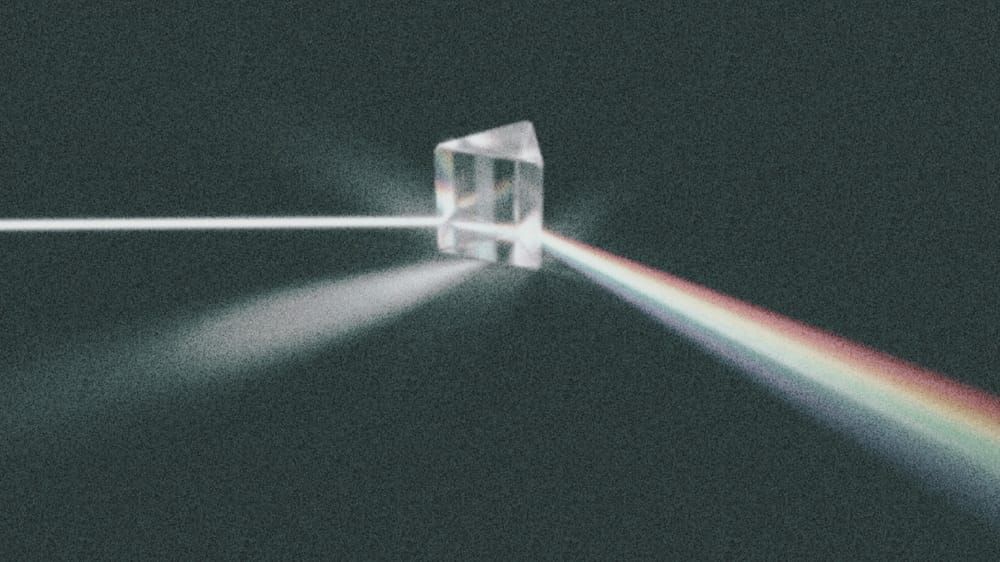
The lower aspects of manifestation lead us into individuality, diversity, and colourfulness, just as light passing through a prism disperses into a spectrum of colours. However, when we reverse the process and reach the Essence of creation, we see that colourfulness is established on colourlessness and individuality merges into a Collective Whole. Everything emerges from Oneness—Nafs Wāḥidah—where the concept of separation dissolves and ceases to exist.
It is here that the most intimate relationship—between Al-Khāliq and makhlūq—begins to reveal itself.
It is here that the most intimate relationship—between Al-Khāliq and makhlūq—begins to reveal itself.
Your link has expired. Please request a new one.
Your link has expired. Please request a new one.
Your link has expired. Please request a new one.
Great! You've successfully signed up.
Great! You've successfully signed up.
Welcome back! You've successfully signed in.
Success! You now have access to additional content.